
01 / Start with a shape
Before naming any sweets, look at the biggest shapes in a scene. The cover begins with a circle. The sherbet volcano begins with a triangle. The gummy express follows a diagonal. Those broad decisions make the smaller details easier to read.
Try covering the tiny marks with your hand or looking from a little farther away. What remains? That is often the part doing the most work.
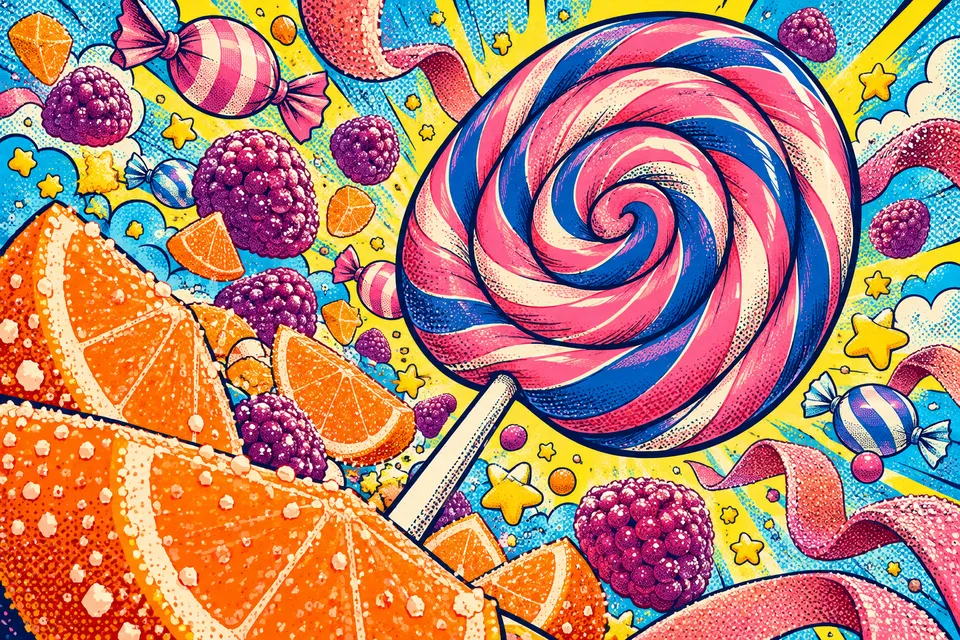
02 / Find the rhythm
Repeated shapes create a beat: peppermint wheels, umbrella curves, wrapped bonbons. The interesting part is often the interruption. A citrus triangle among circles can catch your eye without being the largest object.
Draw five similar marks, then change just one. Make it taller, rotate it or leave a little more space around it. Notice how small a change can be before the pattern starts to tell a different story.
03 / Add a small task
A character does not need a complicated biography. The gummy residents are walking through the rain. The lolly musicians are trying to play together. A familiar action gives an unusual creature a reason to be in the picture.
Choose a sweet shape and give it one ordinary task: carrying a bag, waiting for a friend or keeping a hat on in the wind. Let the shape suggest how it might move.
04 / Keep the first attempt small
- Choose one main shape and two supporting shapes.
- Limit the first sketch to three colours plus the paper.
- Use one large area and one much smaller detail.
- Ask what happened just before the scene, or what might happen next.
These are starting points, not rules for good art. If a surprising choice makes the picture more interesting to you, follow it. The flavour finder can offer a small prompt when you would like somewhere to begin.